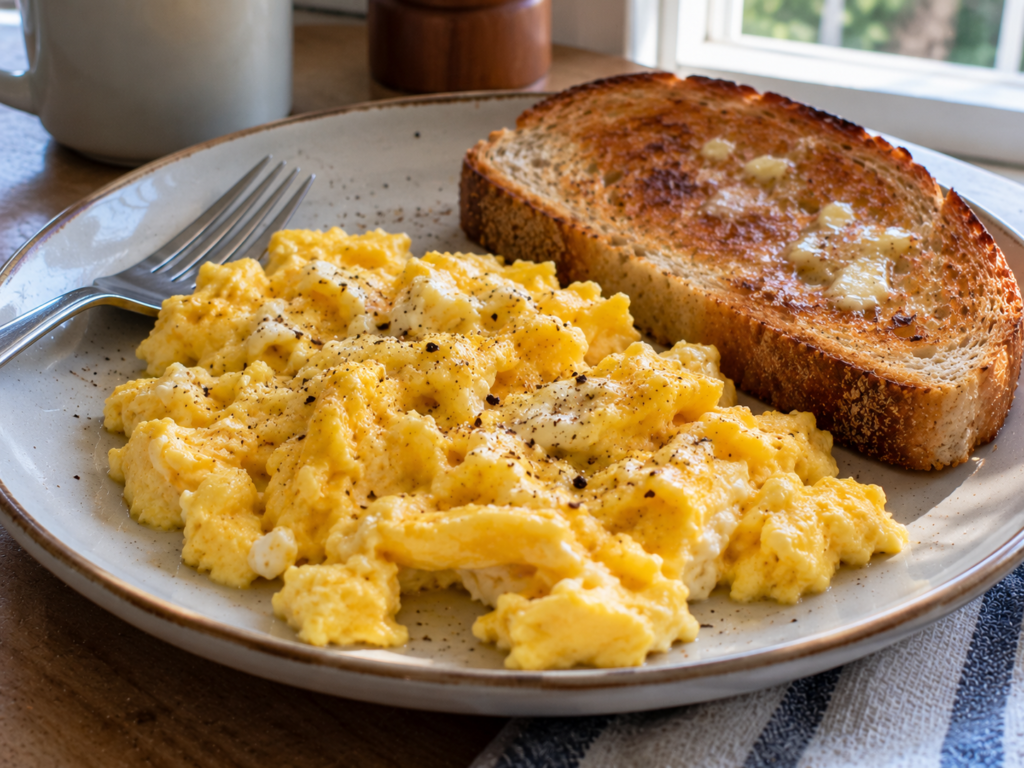
Fluffy scrambled eggs are one of the easiest and most satisfying breakfasts to make at home. With just a few simple ingredients, you can prepare soft, buttery eggs with delicate curds, a tender texture, and a little freshly ground black pepper.
The secret to delicious scrambled eggs is simple: whisk the eggs thoroughly, cook them gently over low to medium-low heat, and remove them from the pan while they’re still slightly soft. The residual heat will finish cooking them without making them dry or rubbery.
Serve them with a slice of buttered toast for a quick homemade breakfast that’s perfect for busy mornings or relaxed weekend brunches.
Why You’ll Love This Recipe
- Soft and fluffy: Gentle cooking creates tender, irregular egg curds.
- Rich buttery flavor: Butter adds flavor and helps keep the eggs moist.
- Quick breakfast: Ready in approximately 10 minutes.
- Simple ingredients: You only need eggs, butter, salt, and pepper.
- Easy to customize: Add cheese, herbs, vegetables, or your favorite seasonings.
- Perfect with toast: A simple combination that makes a satisfying breakfast.
Preparation and Cooking Time
- Preparation time: 3 minutes
- Cooking time: 5–7 minutes
- Total time: Approximately 10 minutes
- Servings: 2
- Cooking method: Stovetop
Ingredients
- 4 large eggs
- 1 tablespoon unsalted butter
- 1 tablespoon milk or cream, optional
- ¼ teaspoon salt, or to taste
- ¼ teaspoon freshly ground black pepper
- 2 slices bread, for serving
- Additional butter for the toast
Optional Garnishes
- Chopped fresh chives
- Fresh parsley
- A little grated cheddar cheese
- A pinch of paprika
- Extra black pepper
Ingredient tip: Fresh eggs and good-quality butter make a noticeable difference. Whole milk or cream can add richness, but you can make excellent scrambled eggs without either.
How to Make Fluffy Scrambled Eggs
Step 1: Crack the eggs
Crack the eggs into a medium-sized mixing bowl.
Check for any pieces of eggshell and remove them if necessary.
Step 2: Whisk the eggs
Add the milk or cream if using.
Whisk the eggs with a fork or small whisk until the yolks and whites are fully combined and the mixture looks evenly yellow.
Avoid over-whisking. You simply want a smooth, consistent mixture.
Step 3: Season the eggs
Add the salt and a little black pepper.
Whisk briefly to distribute the seasoning.
You can also wait until the eggs are nearly cooked to add the salt if you prefer.
Step 4: Melt the butter
Place a nonstick skillet over low to medium-low heat.
Add the butter and allow it to melt slowly.
Tilt the pan to coat the bottom evenly.
The butter should melt gently without turning brown.
Step 5: Add the egg mixture
Pour the beaten eggs into the skillet.
Allow them to sit undisturbed for approximately 10–15 seconds until the edges begin to set.
Keep the heat low to prevent the eggs from cooking too quickly.
Step 6: Gently stir the eggs
Using a silicone spatula, slowly push the cooked eggs from the edges toward the center of the skillet.
Tilt the pan slightly so the uncooked egg mixture flows into the empty spaces.
Continue folding and stirring gently.
Avoid breaking the eggs into tiny pieces. Slow, gentle movements help create soft, irregular curds.
Step 7: Cook until softly set
Continue cooking for approximately 2–4 minutes, depending on the heat and the size of your skillet.
The eggs should look mostly set but still slightly glossy and moist.
Remove the skillet from the heat while the eggs are just a little softer than your preferred final texture.
The remaining heat will continue cooking them.
Step 8: Prepare the toast
While the eggs are cooking, toast the bread until golden and lightly crisp.
Spread a little butter over each slice while it’s still warm.
Step 9: Plate and serve
Transfer the scrambled eggs to an everyday breakfast plate.
Sprinkle with freshly ground black pepper and chopped chives or parsley if desired.
Place the buttered toast beside the eggs.
Serve immediately while the eggs are warm, soft, and fluffy.
Tips for the Best Scrambled Eggs
Cook over low heat
Gentle heat is the most important part of making tender scrambled eggs. High heat can quickly make them dry, tough, and rubbery.
Use a nonstick skillet
A nonstick pan makes stirring easier and helps prevent the eggs from sticking to the bottom.
Use a silicone spatula
A flexible spatula allows you to fold the eggs gently and scrape the bottom of the skillet without damaging the pan.
Don’t overcook the eggs
Remove them from the heat while they’re still slightly glossy. They will continue cooking from the residual heat.
Avoid stirring too aggressively
Gentle folding creates soft, irregular curds. Constant vigorous stirring can produce very small, dry pieces.
Add butter for flavor
Butter gives scrambled eggs a rich taste and helps create a tender texture.
Whisk before cooking
Mixing the yolks and whites thoroughly helps produce evenly colored eggs with a consistent texture.
Serve immediately
Scrambled eggs are best enjoyed straight from the skillet. They can become firmer as they cool.
Delicious Scrambled Egg Variations
Cheesy Scrambled Eggs
Add ¼ cup of shredded cheddar cheese when the eggs are nearly cooked.
Fold gently until the cheese melts.
You can also use mozzarella, Monterey Jack, or Parmesan.
Scrambled Eggs with Bacon
Cook 3–4 strips of bacon until crispy.
Remove them from the skillet, crumble into small pieces, and sprinkle over the finished eggs.
Scrambled Eggs with Vegetables
Sauté finely chopped bell peppers, onions, and mushrooms in a little butter.
Once softened, pour in the beaten eggs and cook as directed.
Scrambled Eggs with Spinach
Add a handful of fresh baby spinach to the skillet and cook until wilted.
Pour in the beaten eggs and stir gently until softly set.
Creamy Scrambled Eggs
Replace the milk with 1 tablespoon of heavy cream.
Cook slowly over low heat, folding gently until the eggs become soft and creamy.
Scrambled Eggs with Fresh Herbs
Fold chopped chives, parsley, or dill into the eggs near the end of cooking.
Fresh herbs add a light, fresh flavor.
Spicy Scrambled Eggs
Add a pinch of cayenne pepper or red pepper flakes to the egg mixture.
Serve with a little hot sauce if desired.
Garlic Butter Scrambled Eggs
Melt the butter with a very small amount of finely minced garlic.
Cook for approximately 20–30 seconds before adding the eggs.
Avoid browning the garlic.
Scrambled Eggs with Tomatoes
Sauté a small handful of chopped tomatoes until slightly softened.
Add the beaten eggs and cook gently.
The tomatoes add freshness and a little natural sweetness.
Dairy-Free Scrambled Eggs
Replace the butter with olive oil or a dairy-free butter alternative.
Simply leave out the milk or use an unsweetened plant-based alternative.
What to Serve with Scrambled Eggs
Scrambled eggs pair well with many simple breakfast foods.
- Buttered toast: A classic choice for a quick breakfast.
- Crispy bacon: Adds a salty, savory contrast.
- Breakfast sausages: Makes the meal more filling.
- Hash browns: Adds a crispy potato side.
- Fresh tomatoes: Bring freshness and color to the plate.
- Avocado slices: Add a creamy texture.
- Sautéed mushrooms: A delicious savory addition.
- Fresh fruit: Strawberries, bananas, and oranges work well.
- Baked beans: A traditional hearty breakfast side.
- Coffee or tea: Perfect alongside warm scrambled eggs.
For a simple homemade breakfast, serve scrambled eggs with buttered toast, fresh tomatoes, and a cup of coffee.
Make-Ahead Instructions
Scrambled eggs are best cooked just before serving, but you can prepare a few things in advance.
Prepare the ingredients: Crack the eggs into a covered container and refrigerate them if you plan to cook them within 24 hours.
Prepare the toast: Slice the bread and keep it ready for toasting.
Prepare the garnishes: Chop fresh herbs and store them in a small airtight container in the refrigerator.
Cook when ready: Scramble the eggs shortly before serving for the best texture.
Storage and Reheating
Scrambled eggs are best enjoyed fresh, but leftovers can be stored safely.
Refrigerator: Transfer cooled scrambled eggs to an airtight container and refrigerate at 40°F (4°C) or below for up to 3–4 days.
Freezer: Freezing is not recommended because the eggs can become watery and rubbery after thawing.
Stovetop reheating: Place the eggs in a nonstick skillet over low heat. Add a small piece of butter and stir gently until heated through.
Microwave reheating: Place the eggs in a microwave-safe bowl. Cover loosely and heat in 15–20-second intervals, stirring between intervals.
Food safety: Refrigerate cooked eggs within 2 hours of cooking and reheat leftovers to 165°F (74°C).
Frequently Asked Questions
How do I make scrambled eggs fluffy?
Whisk the eggs until the yolks and whites are combined, then cook gently over low to medium-low heat. Fold the eggs slowly with a spatula and avoid overcooking.
Should I add milk to scrambled eggs?
Milk is optional. It adds a little moisture, but excellent scrambled eggs can be made using only eggs and butter.
Why are my scrambled eggs watery?
They may have been cooked at too high a temperature, released moisture from added vegetables, or been undercooked. Cook gently and avoid adding too much liquid.
Why are my scrambled eggs rubbery?
Rubbery eggs are usually the result of overcooking. Lower the heat and remove the eggs from the pan while they are still slightly glossy.
Should I add salt before or after cooking?
Either method works. Adding salt before cooking helps distribute the seasoning evenly. You can also season near the end.
Can I make scrambled eggs without butter?
Yes. Use olive oil or another cooking oil. The flavor will be slightly different, but the eggs will still cook well.
How long should scrambled eggs cook?
Usually 3–5 minutes over low to medium-low heat, depending on the quantity and skillet. Watch the texture rather than relying only on the clock.
Can I make scrambled eggs in the microwave?
Yes. Whisk the eggs in a microwave-safe bowl and heat in short intervals, stirring between each one until fully cooked.
What is the best pan for scrambled eggs?
A small or medium nonstick skillet is ideal because it makes the eggs easier to stir and remove.
How do I know when scrambled eggs are done?
The eggs should be softly set with no visible liquid egg remaining. For food safety, egg dishes should reach 160°F (71°C).
Final Thoughts
Fluffy scrambled eggs are a simple homemade breakfast that proves you don’t need complicated ingredients to make something delicious.
The secret is to use fresh eggs, melt the butter gently, cook over low heat, and fold the eggs slowly until they form soft, tender curds.
Serve them with buttered toast and freshly ground black pepper for a quick, comforting breakfast that’s perfect any morning.
Save this easy scrambled eggs recipe for your next homemade breakfast!