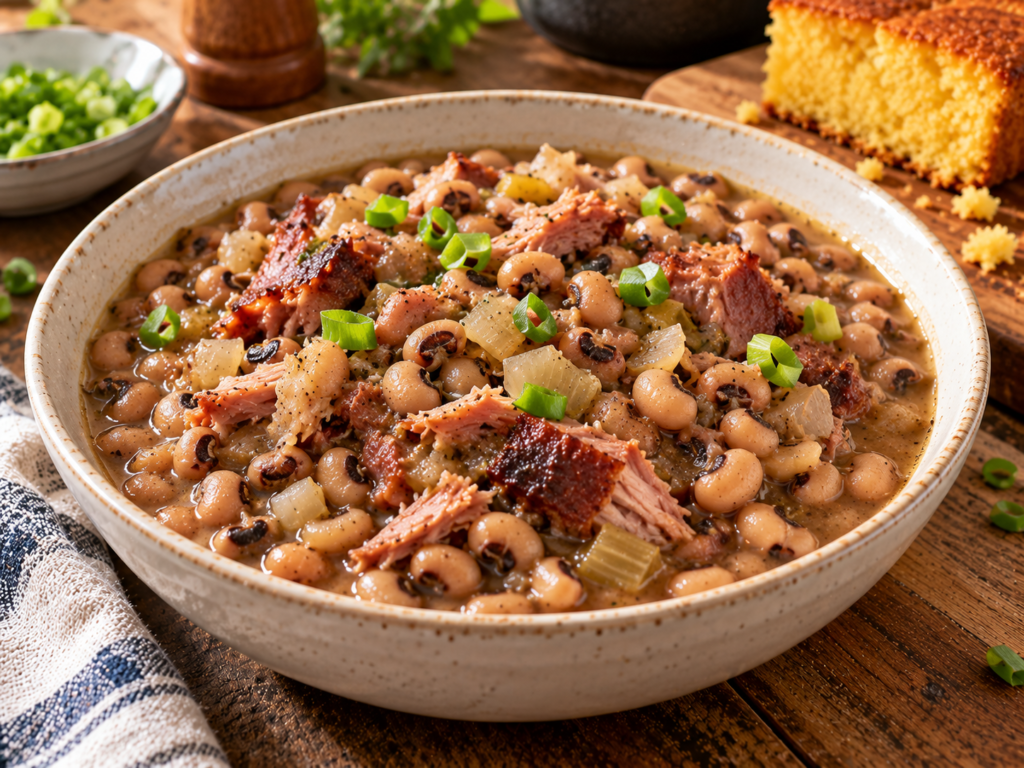
Southern Black-Eyed Peas with Smoked Turkey
Southern black-eyed peas are a comforting, hearty dish made with tender beans, smoky turkey, aromatic vegetables, and a flavorful broth. Slowly simmered until the peas become soft and creamy, this traditional Southern favorite is full of savory flavor and pairs beautifully with homemade cornbread.
Black-eyed peas are especially popular in Southern cooking around New Year’s Day, when many families serve them as a symbol of good luck and prosperity for the year ahead. However, this satisfying dish is delicious enough to enjoy throughout the year.
The secret to flavorful black-eyed peas is allowing them to simmer gently with smoked turkey, onions, garlic, and seasonings. As the ingredients cook together, the broth becomes richer while the peas absorb the smoky, savory flavors.
Serve a warm bowl alongside cornbread, collard greens, fried chicken, or rice for a delicious homemade meal.
Why You’ll Love This Recipe
- Rich, smoky flavor: Smoked turkey adds depth to the broth without requiring smoked pork.
- Tender, creamy peas: Slow cooking allows the black-eyed peas to soften while absorbing the seasonings.
- Simple ingredients: Dried peas, onions, garlic, broth, and a few pantry seasonings create a satisfying dish.
- Perfect for family meals: This recipe works well for Sunday dinners, holiday gatherings, and everyday comfort food.
- Budget-friendly: Dried black-eyed peas are an affordable ingredient that can feed a family.
- Easy to customize: Adjust the spice level, add vegetables, or make a meat-free version.
Preparation and Cooking Time
- Preparation time: 15 minutes, plus optional soaking time
- Cooking time: 1 hour to 1 hour 30 minutes
- Total time: Approximately 1 hour 15 minutes to 1 hour 45 minutes, excluding soaking
- Servings: 6
- Cooking method: Stovetop
Ingredients
- 1 pound (450 g) dried black-eyed peas
- 1 smoked turkey leg or approximately 1 pound smoked turkey pieces
- 1 medium yellow onion, diced
- 2 celery stalks, diced
- 3 garlic cloves, minced
- 6–8 cups chicken broth or water
- 1 tablespoon olive oil
- 1 teaspoon smoked paprika
- ½ teaspoon black pepper
- ½ teaspoon dried thyme
- ¼–½ teaspoon red pepper flakes, optional
- 1 bay leaf
- 1 tablespoon apple cider vinegar
- Salt, to taste
- 2 green onions, thinly sliced, for garnish
Ingredient note: Smoked turkey legs or wings add excellent flavor to the cooking liquid. If your turkey and broth are already salty, wait until the peas are tender before adding additional salt.
How to Make Southern Black-Eyed Peas
Step 1: Sort and rinse the black-eyed peas
Spread the dried black-eyed peas on a clean tray or plate and remove any small stones, damaged peas, or debris.
Place the peas in a colander and rinse them thoroughly under cold running water.
Although black-eyed peas do not always require soaking, soaking can shorten the cooking time and help them cook more evenly.
Optional soaking: Place the peas in a large bowl, cover them with several inches of cold water, and soak for 4–8 hours. Drain and rinse before cooking.
If you’re short on time, you can skip soaking and cook the dried peas directly, allowing additional time for them to become tender.
Step 2: Sauté the onion and celery
Heat the olive oil in a large heavy-bottomed pot or Dutch oven over medium heat.
Add the diced onion and celery. Cook for approximately 4–5 minutes, stirring occasionally, until the vegetables begin to soften.
Add the minced garlic and cook for another 30–60 seconds, stirring constantly to prevent it from burning.
These aromatic vegetables form the foundation of the dish, adding sweetness and savory flavor to the broth.
Step 3: Add the smoked turkey and seasonings
Place the smoked turkey pieces into the pot with the sautéed vegetables.
Add the smoked paprika, black pepper, dried thyme, optional red pepper flakes, and bay leaf. Stir gently to distribute the seasonings.
Pour in 6 cups of chicken broth or water, making sure the turkey is mostly submerged.
Bring the liquid to a gentle boil, then reduce the heat and simmer for approximately 20–30 minutes. This allows the smoked turkey to begin releasing its flavor into the broth.
Step 4: Add the black-eyed peas
Add the rinsed black-eyed peas to the pot and stir gently.
Check the liquid level. The peas should be covered by approximately an inch of liquid at the beginning of cooking. Add more broth or water if necessary.
Bring the mixture back to a gentle simmer. Reduce the heat to low and partially cover the pot with a lid.
Avoid a vigorous boil, which can cause the peas to break apart before they cook evenly.
Step 5: Simmer until tender
Cook the peas for approximately 45–75 minutes, stirring occasionally.
If you’re using soaked peas, begin checking for tenderness after about 30–45 minutes. Unsoaked peas may take longer, depending on their age and quality.
Add more hot water or broth whenever the liquid becomes too low. The peas should remain moist and surrounded by broth throughout cooking.
The black-eyed peas are ready when they are tender and creamy inside but still hold their shape.
If you prefer a thicker broth, gently mash a small spoonful of the cooked peas against the side of the pot and stir them back into the liquid.
Step 6: Shred the smoked turkey
Once the turkey is tender, carefully remove it from the pot and place it on a plate to cool slightly.
Remove the skin, bones, and cartilage. Shred the meat into bite-sized pieces and return it to the pot.
Discard the bones and bay leaf before serving.
Stir the shredded turkey into the peas so the smoky meat is evenly distributed throughout the dish.
Step 7: Finish with vinegar and adjust the seasoning
Stir in the apple cider vinegar. It adds brightness to the savory broth and helps balance the smoky flavor.
Taste the peas and add salt if needed. Adjust the black pepper or red pepper flakes according to your preference.
Allow everything to simmer for another 5–10 minutes so the flavors come together.
If the broth is too thin, continue simmering uncovered for a few minutes. If it is too thick, add a little more broth or water.
Step 8: Garnish and serve
Remove the pot from the heat and let the peas rest for a few minutes.
Ladle them into serving bowls, making sure each portion contains plenty of peas, smoked turkey, and flavorful broth.
Sprinkle sliced green onions over the top for a fresh finish.
Serve hot with cornbread, collard greens, or your favorite Southern side dishes.
Tips for the Best Southern Black-Eyed Peas
Check the peas before cooking
Dried peas vary in age and moisture content. Older peas may take longer to soften, even when soaked. Taste them during cooking rather than relying entirely on the clock.
Use smoked turkey for a deeper flavor
Smoked turkey adds savory depth to the broth. A smoked leg or wing works particularly well because it can flavor the liquid while providing tender meat for the finished dish.
Don’t add too much salt at the beginning
Smoked turkey and prepared chicken broth may contain significant amounts of sodium. Season gradually and adjust the salt once the peas are nearly tender.
Keep the heat low
A gentle simmer helps the peas cook evenly and reduces the chance of their skins splitting excessively.
Add liquid as needed
Black-eyed peas absorb liquid during cooking. Keep extra hot water or broth nearby so you can maintain a moist, soupy consistency.
Let the peas rest briefly
Allowing the cooked peas to sit for 5–10 minutes before serving helps the broth settle and the flavors combine.
Delicious Variations
Black-Eyed Peas with Smoked Turkey Wings
Replace the smoked turkey leg with smoked turkey wings. Simmer until the meat becomes tender, then remove the bones and return the shredded meat to the pot.
Spicy Southern Black-Eyed Peas
Add extra red pepper flakes or a small amount of cayenne pepper for a stronger kick. You can also serve the peas with hot sauce at the table so everyone can adjust the heat.
Black-Eyed Peas with Bacon
For a pork-based variation, cook several strips of chopped bacon in the pot before adding the onion and celery. Use the rendered fat to sauté the vegetables, then continue with the recipe.
Reduce the added salt because bacon can make the broth quite salty.
Vegetarian Black-Eyed Peas
Omit the smoked turkey and use vegetable broth. Build flavor by sautéing onion, celery, and garlic, then adding smoked paprika, thyme, black pepper, and a bay leaf.
For extra richness, stir in a small amount of olive oil near the end of cooking.
Black-Eyed Peas with Tomatoes
Add one cup of diced tomatoes after sautéing the vegetables. The tomatoes create a slightly tangy broth that complements the peas and smoked turkey.
Black-Eyed Peas with Rice
Serve the finished peas over cooked white rice for a hearty meal. Spoon plenty of broth over the rice so it absorbs the smoky flavor.
What to Serve with Southern Black-Eyed Peas
Black-eyed peas pair naturally with Southern comfort food. Their savory broth complements cornbread, greens, and roasted or fried meats.
Some excellent side dishes include:
- Southern cornbread: Perfect for soaking up the flavorful broth.
- Collard greens with smoked turkey: A classic pairing of tender greens and smoky, savory flavors.
- Southern fried chicken: Crispy chicken provides a delicious contrast to the soft peas.
- Baked macaroni and cheese: A creamy, cheesy side dish for a generous comfort-food dinner.
- Candied yams: Their buttery sweetness balances the savory peas.
- White rice: An easy way to turn the peas into a filling main course.
- Barbecue ribs: Smoky barbecue flavors complement the turkey-seasoned broth.
For a traditional Southern-inspired meal, serve the black-eyed peas with cornbread, collard greens, and fried chicken.
Make-Ahead Instructions
Black-eyed peas are an excellent make-ahead dish because their flavor often develops further after resting.
You can cook the peas a day in advance, allow them to cool promptly, and refrigerate them with their broth. When ready to serve, reheat them gently on the stovetop, adding a little water or broth if the mixture has thickened.
If you’re planning to use dried peas, you can also soak them in advance. Keep them covered in water in the refrigerator while soaking, then drain and rinse them before cooking.
For the best texture, avoid cooking the peas until they completely fall apart if you know you’ll be reheating them later.
Storage and Reheating
Refrigerator: Cool the peas promptly and refrigerate them in an airtight container within 2 hours of cooking. Use within 3–4 days.
Freezer: Freeze the cooled peas with some of their broth in freezer-safe containers for up to 3 months for best quality. Leave a little space at the top for expansion.
Stovetop reheating: Place the peas and broth in a saucepan over medium-low heat. Stir occasionally and add extra broth or water if needed. Heat until thoroughly hot.
Microwave reheating: Transfer a portion to a microwave-safe bowl, cover loosely, and heat in intervals, stirring between each interval.
Keeping the peas with their broth helps prevent them from drying out during storage and reheating.
Frequently Asked Questions
Do black-eyed peas need to be soaked overnight?
No. Black-eyed peas are relatively quick-cooking legumes, so soaking is optional. Soaking for 4–8 hours can shorten the cooking time, but unsoaked peas can be cooked directly on the stovetop.
Why are my black-eyed peas still hard?
They may need more time, particularly if the dried peas are old. Continue simmering gently and check them every 10–15 minutes. Keep enough liquid in the pot to prevent scorching.
Can I use canned black-eyed peas?
Yes. Canned peas are already cooked, so the preparation time will be much shorter. Simmer the smoked turkey and vegetables in the broth first, then add the drained canned peas during the final 15–20 minutes to allow them to absorb the flavors without becoming mushy.
How do I make the broth thicker?
Mash a small portion of the cooked peas against the side of the pot and stir them back into the broth. You can also simmer the dish uncovered for a few minutes to reduce excess liquid.
Can I make black-eyed peas without smoked meat?
Absolutely. Use vegetable broth and seasonings such as smoked paprika, garlic, onion, and thyme. This produces a flavorful vegetarian version without smoked turkey.
Are black-eyed peas spicy?
Not necessarily. This recipe uses optional red pepper flakes, so you can leave them out for a milder flavor or increase them if you enjoy spicy food.
What is the best way to serve black-eyed peas?
Serve them hot in bowls with some of their broth, shredded smoked turkey, and sliced green onions. Cornbread is a traditional accompaniment because it absorbs the savory cooking liquid.
Final Thoughts
Southern black-eyed peas with smoked turkey are a hearty, satisfying dish that brings traditional comfort-food flavor to the dinner table. The tender peas, smoky meat, aromatic vegetables, and savory broth create a simple meal that feels both nourishing and comforting.
For the best results, simmer the peas gently until tender, keep enough broth in the pot, and season carefully toward the end of cooking. A little apple cider vinegar brightens the finished dish, while green onions add a fresh final touch.
Serve these black-eyed peas with homemade cornbread, collard greens, baked macaroni and cheese, or crispy Southern fried chicken for a memorable family meal.
Save this Southern black-eyed peas recipe for your next Sunday dinner or New Year’s Day celebration, and serve it with plenty of warm cornbread!